
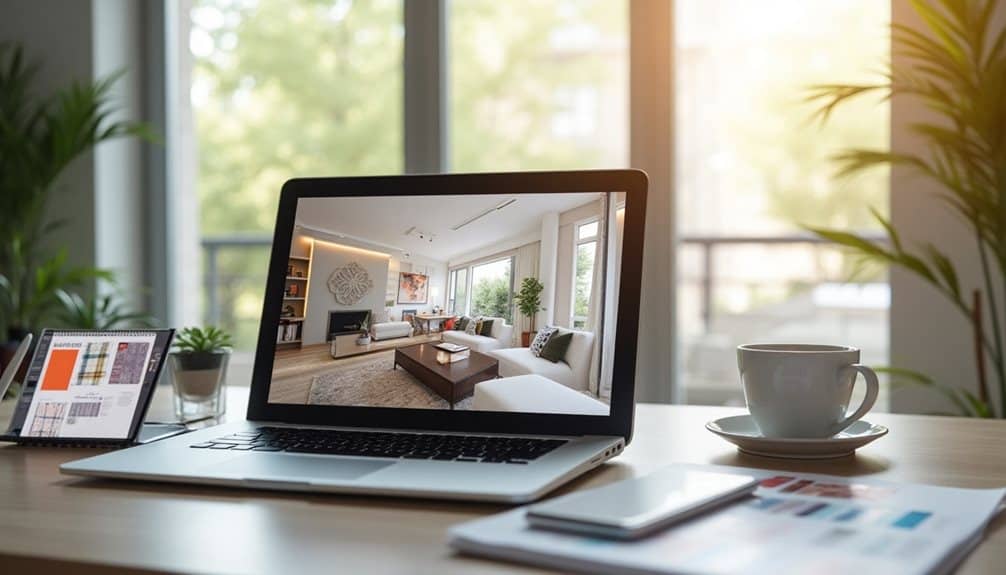
A virtual interior design studio redefines how homeowners approach remodeling and decorating projects by offering remote consultations that blend technology with creativity. Through video calls, designers can connect personally, while digital mood boards and 3D renderings provide vivid previews of potential transformations. This method not only expands access but also enhances collaboration and precision. Yet, the true challenge lies in mastering these tools to deliver a seamless, client-centered experience that meets evolving expectations.
Benefits of Remote Interior Design Consultations
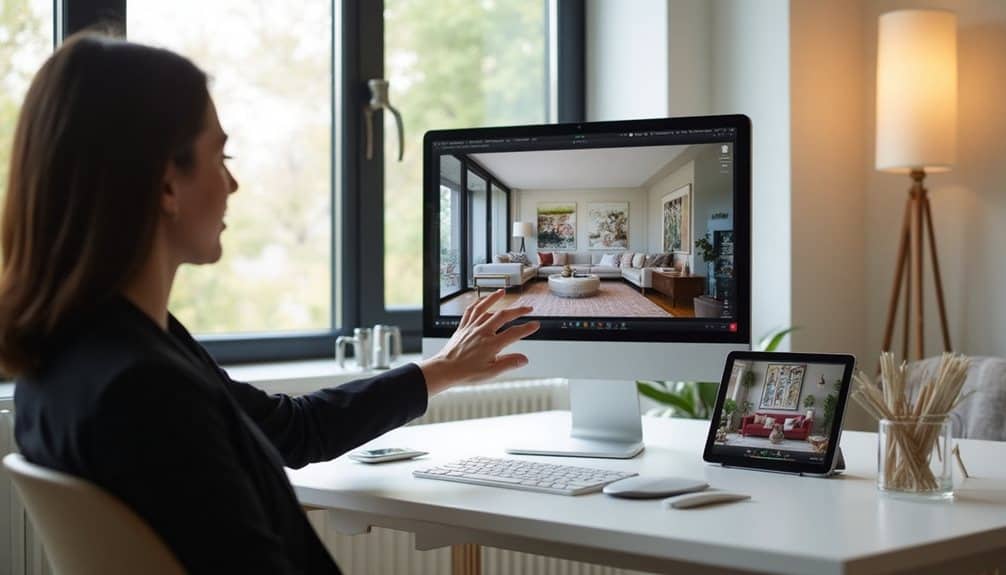
Although traditional interior design has long depended on in-person consultations, the rise of remote consultations has dramatically transformed the client experience, delivering unmatched convenience and accessibility. Clients now have the ability to connect with professional designers from any location, eliminating geographical barriers and making scheduling far more flexible. This approach is especially valuable for busy professionals, families, or those living in remote areas who may not have easy access to local design expertise.
Remote consultations provide a new level of design flexibility. Through the use of advanced digital tools, such as high-resolution video calls and interactive virtual whiteboards, both clients and designers can collaborate effectively without the need for physical meetings. This digital workflow enables iterative adjustments—clients can review concepts, request changes, and provide feedback in real time. Tools like 3D modeling software and augmented reality (AR) apps allow clients to visualize how proposed changes will look in their actual spaces, leading to more confident decisions.
The process is highly personalized. With features like screen sharing, digital mood boards, and online surveys, designers can gain a deep understanding of each client’s preferences, lifestyle, and goals. This tailored approach, combined with instant feedback loops, sparks creative solutions that truly resonate with the client’s vision. As a result, the design journey is more transparent and collaborative, with every stage clearly documented and accessible for review.
Clients benefit from increased autonomy and involvement in shaping their environments. By blending professional expertise with digital convenience, remote consultations foster higher levels of client satisfaction. The entire remodeling or decorating experience becomes seamless and inspiring, empowering clients to realize their dream spaces on their own terms.
Essential Tools for Virtual Interior Design Studios
When transforming interior design into a fully virtual experience, the right digital tools are indispensable for supporting both creativity and efficient collaboration.
- Virtual Collaboration Tools: Platforms such as Zoom, Microsoft Teams, and Google Meet enable seamless, face-to-face communication between designers and clients, no matter where they are located. These tools foster real-time dialogue, quick decision-making, and effective sharing of visual ideas. Many studios also utilize online project management platforms like Trello or Asana to organize tasks, track progress, and streamline workflows.
- Digital Design Software: Modern programs such as AutoCAD, SketchUp, and Revit allow designers to create detailed floor plans, 3D renderings, and customizable layouts. Clients receive clear previews of proposed designs with realistic lighting, textures, and color schemes. Some studios leverage virtual reality (VR) or augmented reality (AR) applications—like Morpholio Board or IKEA Place—so clients can “walk through” their future spaces virtually or see how furniture will fit in real-time.
- Cloud-Based Access: Storing files and projects on cloud services such as Google Drive, Dropbox, or specialized platforms like Houzz Pro ensures that both clients and designers can access shared resources anytime, anywhere. This enhances transparency and keeps all stakeholders up to date with the latest revisions.
By integrating these intuitive technologies, virtual interior design studios create an environment where creativity thrives alongside clarity and organization. The combination of robust collaboration tools and cutting-edge design software redefines interior design consultations, making them more efficient, engaging, and uniquely tailored to each client’s vision.
How to Create Engaging Digital Mood Boards
Digital mood boards are essential tools in interior design, acting as the visual starting point for any project. Their effectiveness depends on careful curation and clear communication of ideas. Designers begin by choosing a color palette that not only reflects the client’s personality but also complements the intended use of the space. Trends show that balanced palettes—mixing bold accent colors with calming neutrals—help evoke specific emotions, whether it’s energy in a workspace or relaxation in a bedroom.
Texture selection is equally important. By juxtaposing elements such as matte fabrics, polished metals, rough woods, and glossy ceramics, designers add both depth and visual interest. This diversity in textures enables a richer sensory experience, making the digital board more engaging and lifelike.
When arranging items like fabrics, furniture, artwork, and lighting options, designers pay close attention to scale, proportion, and flow. Items are placed to demonstrate how they interact in a real space, ensuring the board communicates a sense of harmony while still allowing flexibility for changes.
The digital format provides significant advantages: designers can quickly make adjustments to accommodate client feedback, swap out materials, or test different layouts. This adaptability saves time and money compared to physical boards and supports more collaborative discussions.
Utilizing 3D Renderings to Visualize Design Concepts
3D renderings have revolutionized interior design by translating flat concepts into immersive, interactive visuals. Using advanced software such as SketchUp, 3ds Max, or Revit, designers create highly detailed models that replicate real-world lighting, textures, and spatial relationships.
These renderings allow clients to virtually “walk through” their future spaces, exploring every angle and detail. Studies indicate that clients who view 3D visualizations are 60% more likely to understand and approve design proposals on the first presentation. This clarity helps prevent costly misunderstandings and reduces the number of revisions needed before final decisions are made.
Designers can adjust layouts, materials, colors, and lighting in real-time during consultations. Clients can see how a different sofa would look in their living room or how natural sunlight will shift throughout the day. The tools often include features such as zooming, rotating, and layer toggling, offering a truly interactive experience.
This process not only bridges the gap between imagination and reality but also boosts confidence. Clients feel empowered as active participants in shaping their environments, ensuring the final design matches both their functional needs and personal tastes.
Steps to Conduct Effective Video Call Consultations
Effective video call consultations are a cornerstone of modern, remote interior design services. To maximize productivity and satisfaction, designers begin by establishing clear video etiquette, which includes punctuality, minimizing background noise, using quality microphones and cameras, and presenting a professional appearance.
Preparation is vital—designers organize digital mood boards and 3D renderings in advance. This ensures meetings remain focused and efficient. With screen sharing capabilities, clients can view proposed designs in real time, fostering immediate feedback and collaborative problem-solving.
Active engagement is encouraged throughout: designers ask open-ended questions, invite opinions, and clarify expectations. This interaction ensures that all stakeholders feel heard and valued.
Pacing matters—designers present information in manageable segments rather than overwhelming clients with too many details at once. This helps clients make informed decisions without feeling rushed or confused.
At the end of each session, designers provide a concise summary of key discussion points, outline next steps, and confirm any action items. This recap reinforces understanding and helps clients feel confident about the process moving forward.
By combining structured preparation with flexibility and advanced visualization tools, video consultations become an effective way to maintain high-quality communication and strong client relationships—even at a distance.
Collaborating With Clients in a Virtual Environment
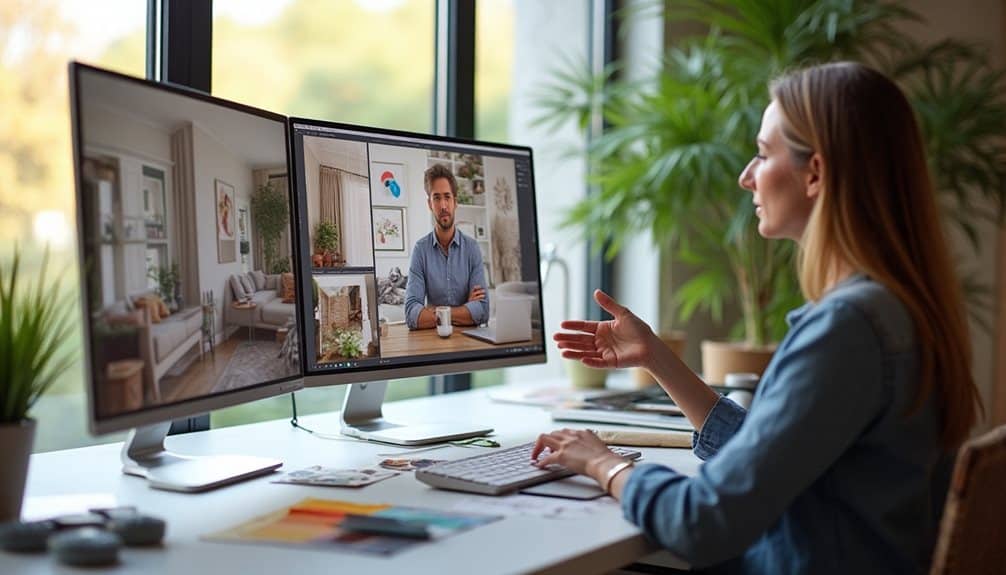
Achieving seamless collaboration in a virtual interior design studio demands more than just technology—it requires deliberate strategies to bridge the gap between designer and client. Effective client communication serves as the foundation, ensuring that every expectation, preference, and revision is clearly understood from the outset. Regular, structured touchpoints—such as weekly video updates or progress emails—help maintain transparency and prevent miscommunication.
The use of interactive digital mood boards such as Canva, Milanote, or Pinterest enables clients to actively participate in the creative process. These platforms allow for real-time feedback, color palette adjustments, and style comparisons, making clients feel invested in shaping the final outcome. Video calls add another layer by capturing nonverbal cues—like facial expressions and gestures—that are vital for building trust and understanding nuanced preferences.
Centralized project management tools—for example, Asana, Trello, or Monday.com—streamline communication by organizing tasks, storing feedback, and tracking deadlines in one accessible location. This structure liberates clients from rigid schedules, letting them review updates and respond at their convenience. Such flexibility encourages open dialogue and supports a more personalized design experience.
Virtual collaboration, when managed with intention and the right technology, transforms traditional limitations into new possibilities. Ideas can be shared instantly, feedback is incorporated quickly, and both clients and designers gain creative freedom unbound by geography.
Managing Project Timelines and Deliverables Remotely
The success of a virtual interior design studio hinges on rigorous management of project timelines and deliverables. A well-defined timeline—often mapped out using Gantt charts or project management software—breaks down the process into clear phases: initial consultation, concept development, design presentation, revisions, procurement, and final approval. This granular approach allows for precise scheduling and resource allocation.
Consistent client communication is essential for keeping everyone informed. Scheduled check-ins via email or collaborative platforms provide regular updates on progress, upcoming deadlines, and any required client input. These digital checkpoints minimize the risk of delays and ensure clients remain engaged without feeling overwhelmed.
Sharing 3D renderings, virtual walkthroughs, and updated mood boards through cloud-based platforms enhances transparency. Clients can visualize proposed changes before they are implemented, offering feedback that can be quickly integrated into the design. This visual clarity reduces misunderstandings and accelerates decision-making.
Organized project management allows designers to meet deadlines while upholding high standards. Clients benefit from a transparent workflow that removes uncertainty and stress. Mastering these remote strategies ultimately leads to a streamlined process—blending flexibility with precision to deliver exceptional results efficiently.
Marketing Your Virtual Interior Design Services Online
With the rapid growth of the virtual interior design industry, distinguishing your services online requires a multi-faceted approach tailored to digital audiences. Targeted social media strategies are crucial; platforms like Instagram and TikTok let designers showcase portfolios, host live Q&A sessions, and share behind-the-scenes glimpses of their creative process. These interactive elements cultivate engagement and make potential clients feel connected even before the first consultation.
Prominently featuring client testimonials across your website, Google reviews, Houzz profile, and social media builds credibility. Authentic feedback—especially when paired with before-and-after photos—demonstrates real-world success and reassures prospective clients of your expertise.
Crafting a freedom-driven marketing message highlights unique advantages such as flexible scheduling, global reach, and the ability to work with anyone from anywhere. This appeals to modern homeowners who prioritize convenience and control over their design experience.
By blending compelling digital storytelling with transparent client feedback, virtual interior design studios can build trust and attract discerning clients seeking innovative solutions. Consistency in branding and messaging ensures your services stand out amid growing competition, guaranteeing both visibility and relevance in a crowded marketplace.
Designing the Future, One Click at a Time
Virtual interior design isn’t just a passing trend—it’s reshaping how we create and enjoy our personal spaces. By combining the power of digital tools with personal, client-centered service, homeowners now have more control, flexibility, and inspiration than ever before. Remote consultations make expert guidance available regardless of location, while interactive mood boards and 3D renderings turn ideas into vivid, confident decisions. With streamlined workflows and clear communication, the design journey becomes as satisfying as the finished space itself.
As technology continues to evolve, so do the possibilities for creative collaboration. Embracing these new ways of working means every project is more tailored, efficient, and enjoyable for both designers and clients. The result? Dream spaces brought to life—no matter where you are.